
Blog
1. Basics: What Are Cloth‑Backed and Paper‑Backed Sandpaper?
Cloth‑backed sandpaper
- Uses fabric (cotton or synthetic cloth) as the backing instead of paper.
- Very flexible and tear‑resistant, lasts longer than regular paper sandpaper.
- Often sold as shop rolls (e.g. 100mm x 5m rolls you tear by hand).
Paper‑backed sandpaper
- Uses different weights of paper as the backing.
- Common formats: sheets, discs, belts for random orbital sanders etc.
- Cheaper and good for large, flat surfaces, but tears and creases more easily.
2. Quick Comparison: Cloth vs. Paper
| Feature | Cloth‑Backed Sandpaper | Paper‑Backed Sandpaper |
| Durability | High – Tear‑resistant, long‑lasting backing. Ideal for heavy use. | Mittel – Easier to tear, especially at edges or when folded. |
| Flexibility | Excellent – Wraps easily around curves, spindles, and complex shapes without cracking. | Limited – Stiffer backing. Tends to crack or crease when folded tightly. |
| Best For | Metalworking, wood turning, contour sanding, and sharp edges. | Flat surfaces (tabletops, panels), light sanding, and random orbital sanders. |
| Wet Sanding | Very Good – Many cloth backings are water‑resistant and durable when wet. | Requires Specific Type – Only works if it is specifically “Wet/Dry” paper. |
| Format | Often sold as Shop Rolls (tear to length) or belts. | Typically sold as Sheets, Discs, or Belts. |
| Cost | Higher upfront cost per roll, but often cheaper per job due to longer life. | Lower upfront cost per pack, but may use more sheets for the same task. |
| Tear by Hand | Yes – Shop rolls are designed to be torn cleanly by hand to any length. | Sometimes – Often requires scissors or a knife to cut cleanly. |
In one line:
- Use cloth‑backed sandpaper when you need durability, flexibility and contour sanding.
- Use paper‑backed sandpaper for occasional, flat‑surface sanding.
3. When Should You Use Cloth Sandpaper?
3.1 Woodworking: Curves, Turning and Edges
Cloth‑backed sandpaper is ideal in woodworking when you:
- Sand turned pieces (spindles, bowls, handles) on a lathe;
- Work on profiles, mouldings and trim with curves;
- Knock down sharp edges where paper tears quickly;
- Need to tear narrow strips to wrap around parts.
Typical grits:
- P80–P120: shaping and removing machine marks
- P150–P240: general smoothing before finish
- P320–P600: fine sanding and between‑coat sanding
3.2 Metalworking: Deburring, Rust Removal and Prep
Metal is tough on abrasives. Cloth‑backed sandpaper is usually the better choice for:
- Deburring cut edges and holes;
- Removing rust and scale;
- Preparing steel or aluminum before paint or coating;
- Blending welds and smoothing small parts.
Suggested grits:
- P40–P120: heavy stock removal, deburring
- P180–P320: surface prep before coating
- P400–P800: pre‑polishing and smoothing
3.3 Auto Body and Equipment Repair
In auto body work and equipment repair, you often deal with:
- Curved panels and complex shapes;
- Tight areas around seams, trims and brackets;
- Mixed surfaces: metal, filler and primers.
Cloth shop rolls let you:
- Tear thin strips for detail areas;
- Use the same abrasive dry and wet;
- Keep key grits on the bench and pull what you need.
4. When Is Paper Sandpaper the Better Choice?
4.1 Large, Flat Surface Sanding
For:
- Tabletops, doors, cabinets and large panels;
- Sanding with random orbital or palm sanders;
Paper discs or sheets are usually more economical. The backing is fully supported by the sanding pad, so cloth strength is less critical.
4.2 Light‑Duty or Occasional Use
English:
If you:
- Only sand occasionally;
- Have a small, one‑off project;
Standard paper sandpaper is fine and keeps the upfront cost low.
4.3 Between‑Coat Sanding on Flat Finishes
For between‑coat sanding on paint, primer or clear coats:
- You’re in higher grits (P320–P800);
- Pressure is light and surfaces are usually flat.
Here, paper wet/dry sheets with a sanding block can perform very well.
5. Simple Decision Guide: Cloth or Paper?
- Mostly metal, curves, edges, workshop use → choose cloth‑backed sandpaper / cloth shop rolls.
- Mostly flat panels and occasional projects → choose paper‑backed sandpaper.
- Using power sanders for large areas → paper discs/sheets on machines.
- Doing detailed hand work and small parts → cloth shop rolls you can tear to length.
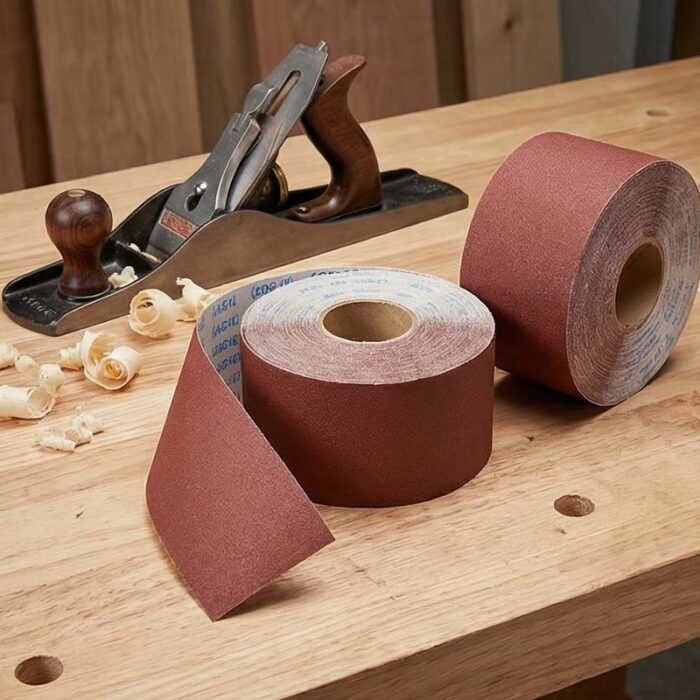
P120 Schleifpapierrolle 100mm × 5m
- Schleifpapierrolle mit 120er-Körnung, ideal zum Schleifen von Holz- und Metalloberflächen.
- Leicht zu zerreißen und auf jede beliebige Größe zu schneiden.
- Strapazierfähig und langlebig mit flexibler Stoffunterlage.
- Sowohl für den trockenen als auch für den nassen Einsatz geeignet.
- Vielseitig einsetzbar für eine Vielzahl von Schleifanwendungen.
- Nach Gebrauch leicht zu reinigen.
- Online verfügbar mit kostenlosem Versand.
999 vorrätig
Verwandte Beiträge
Cloth vs. Paper Sandpaper: Which Should You Use and When?

Was ist Schleifpapierkörnung? (Vollständiger Leitfaden 2026)
Unsere Auswahl für Sie
Neueste Produktbewertungen
-
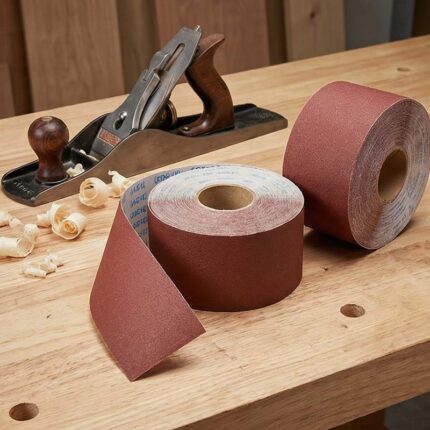 P40-P1000 Schleifpapier-Rollensatz 100mm (ca. 4inch), 5 Rollen
von Jacques
P40-P1000 Schleifpapier-Rollensatz 100mm (ca. 4inch), 5 Rollen
von Jacques
-
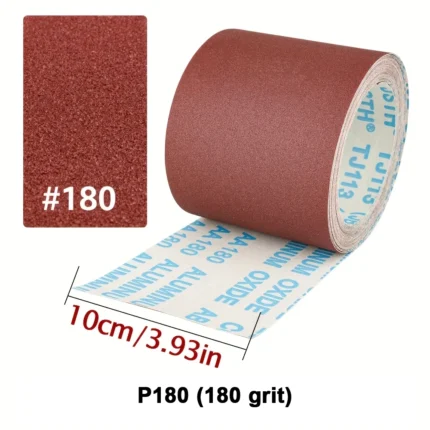 P180 Schleifpapier Rolle 100mm × 5m
von Jacques
P180 Schleifpapier Rolle 100mm × 5m
von Jacques
-
P150 Schleifpapier Rolle 100mm × 5m
von Keith Parker
-
P40 100mm Schleifpapier Rolle - 5m
von lalaxiari666
-
P60 100mm Schleifpapier Rolle - 5m
von Keith Parker
-
P40-P1000 Schleifpapier-Rollensatz 100mm (ca. 4inch), 5 Rollen
von Gio
-
P40-P1000 Schleifpapier-Rollensatz 100mm (ca. 4inch), 5 Rollen
von Liz
-
P40-P1000 Schleifpapier-Rollensatz 100mm (ca. 4inch), 5 Rollen
von Luca
-
P40-P1000 Schleifpapier-Rollensatz 100mm (ca. 4inch), 5 Rollen
von Colin Murray
-
P40-P1000 Schleifpapier-Rollensatz 100mm (ca. 4inch), 5 Rollen
von John Penny
 EN
EN  DE
DE  FR
FR  ES
ES